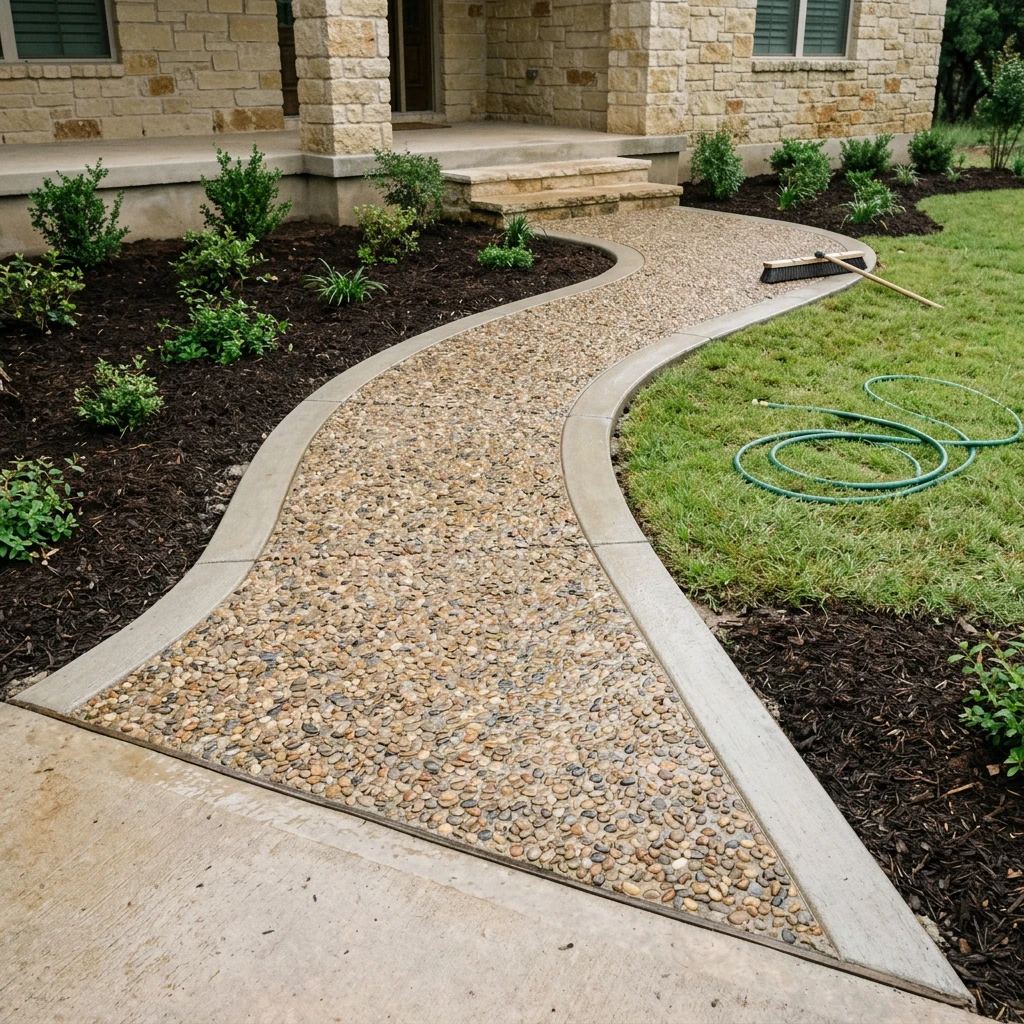
Exposed aggregate
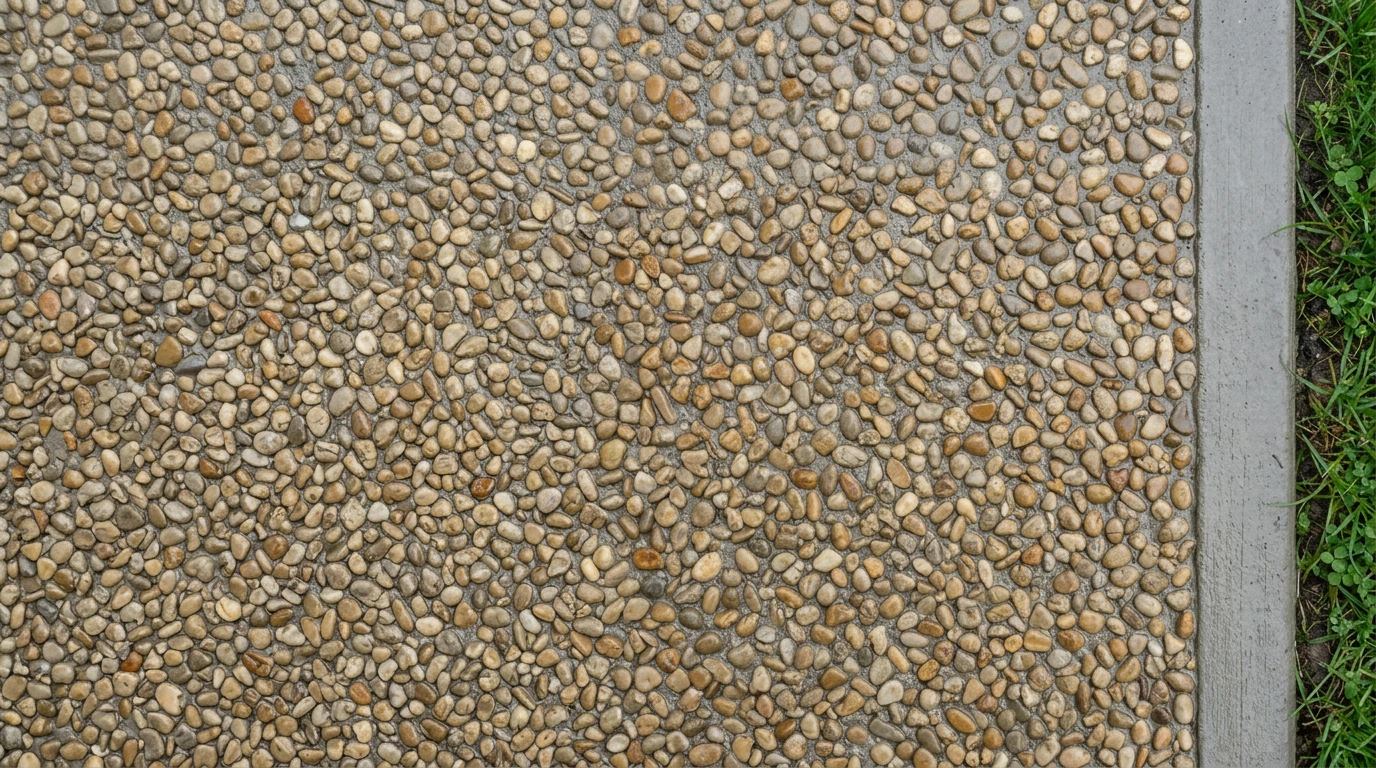
We wash the top layer of cement paste off a fresh slab to show the rounded stone underneath. The stones sit flush in the concrete, so it's a solid surface, not loose gravel.
- Grip: the stone texture holds up well underfoot when wet, which makes it a good pick for front walks, steps and driveways.
- Hides dirt: the varied stone colors hide tire marks and dirt better than smooth gray concrete does.
- The look depends on the stone. Tan, gray and rust river rock is common here. We'll show you photos of the stone mix the plant carries before you pick.
The trade-off: it's rougher on bare feet than a broom finish, so we usually steer people away from it right around a pool.
Stained concrete
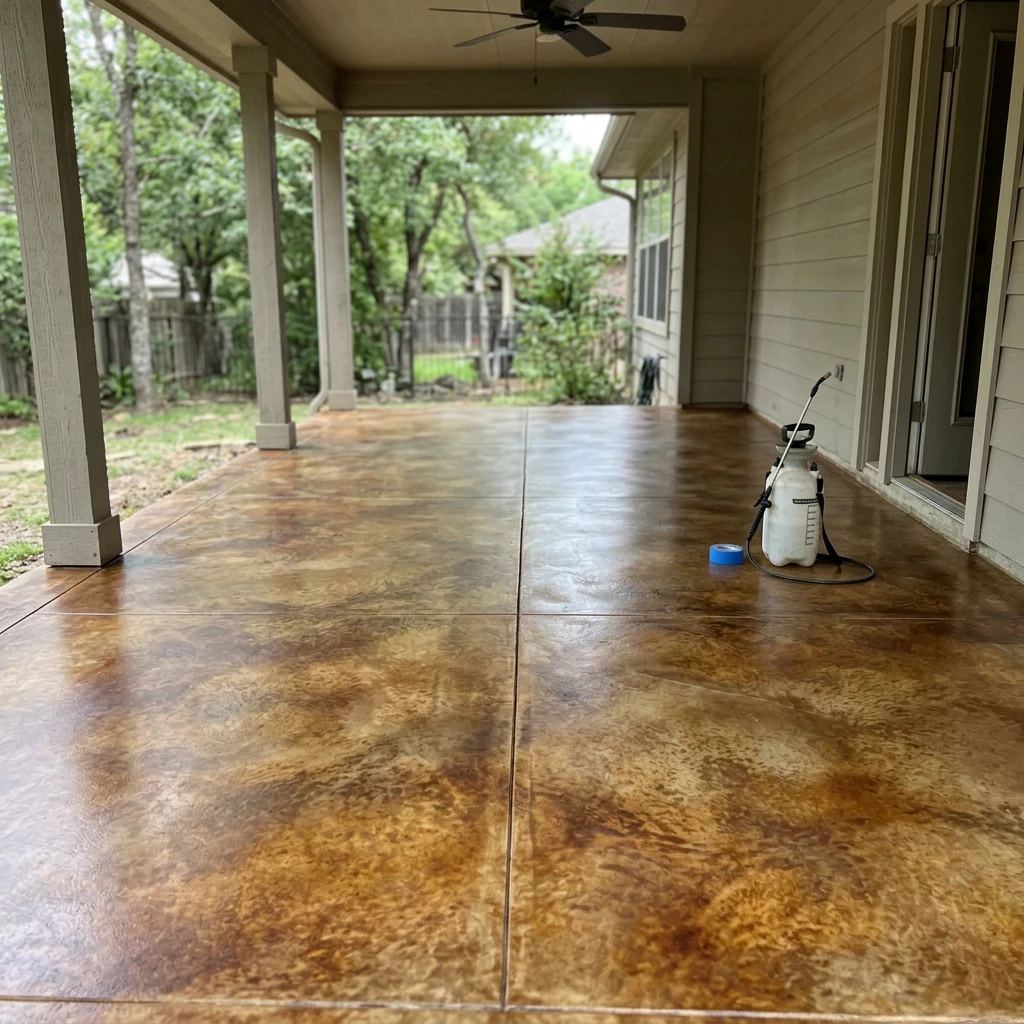
Acid stain reacts with the lime in the concrete and leaves a mottled, variegated finish, a bit like aged leather or stone. No two slabs come out the same, and that's the point. Water-based stain gives more even, predictable color if you'd rather know exactly what you're getting.
Stain goes on after the slab cures, so it works best on covered porches and patios where it's out of the worst weather. It has to be sealed, and the sealer needs redoing every two to three years to keep the color deep.
Integral color
Pigment mixed into the whole batch at the plant, so the color goes all the way through and a chip doesn't show gray underneath. Earth tones like tan, buff and a warm gray sit well next to limestone and brick, which is most of what you see around Manhattan. It pairs with any finish: broom, stamped or a stamped border.
Borders and bands
A colored or stamped border around a plain broom-finished slab gets you most of the decorative look for a lot less than finishing the whole area. It's the most common way we keep a patio or driveway budget in check.
What to expect
Color in concrete varies from batch to batch and with the weather on pour day. We pour each project from one supplier and one mix, and we tell you up front that a new slab won't exactly match an old one next to it.
Questions about stained & exposed aggregate
Stamped concrete or exposed aggregate: which is better?
They solve different problems. Stamped concrete looks like stone, slate or wood and is smoother underfoot, which suits patios and pool decks. Exposed aggregate has more grip and hides dirt and tire marks, so it’s the better pick for driveways, steps and front walks. Some of the best-looking jobs use both, like an exposed aggregate walk with a stamped border.
Is exposed aggregate more expensive than plain concrete?
Yes, somewhat. It takes a decorative stone mix and extra labor to wash the surface at the right time. It usually costs less than stamping the same area, since there’s no pattern to press and less color work.
Can you stain my existing concrete?
We stain new slabs. Older concrete that has been sealed, painted or patched takes stain unevenly, and the stain can’t hide cracks or settling. If your old patio or porch needs replacing anyway, we can pour it new and stain it once it cures.
Does stained concrete fade outside?
The stain itself holds its color well. The sealer on top is what wears, especially in sun and foot traffic. Resealing every two to three years keeps the color deep, and covered porches hold up the longest.